


WARNING: SENSITIVE TOPIC
Why Anxiety and Depression Travel Together
Before I was diagnosed with POTS (Postural Orthostatic Tachycardia Syndrome ), I wanted to jump off a bridge. I don’t mean that figuratively. I mean I literally wanted to jump off a bridge. To clarify, it was before I was diagnosed with neurological disorders, not because I was diagnosed.
Cardiac arrest caused anoxic brain injury since I wasn’t breathing for 11 minutes. Anoxic brain injury created all sorts of neurological storms, just one of which is POTS.
“I bet you care deeply about everything—and about nothing, all at the same time.”
I didn’t know I had POTS and never even heard of it. So I didn’t realize that it causes physical symptoms that can feel like anxiety or even a panic attack. That includes a racing heart, shortness of breath, dizziness, and feeling shaky. The difference is that POTS is caused by a physical reaction to standing, but anxiety is caused from psychological distress. POTS and anxiety are two completely different conditions, but they have very similar symptoms. POTS is neurological. Anxiety is psychological. I can’t see inside my nervous system or my brain. To me, I couldn’t tell the difference. It’s terrible, no matter what the cause.
When I was experiencing POTS symptoms early on, the only thing I felt was extreme anxiety. I didn’t know it wasn’t anxiety, at least some of the time. When you feel that long enough, you start to feel doomed even if there is no tangible reason. I’ve been to occupational therapy many times, mostly for movement disorders, balance and coordination. During one session, unrelated to movement disorders, my therapist said, “I bet you care deeply about everything—”
I stopped him, “Yes, of course I do!”
“…and also care about nothing, all at the same time,” he finished.
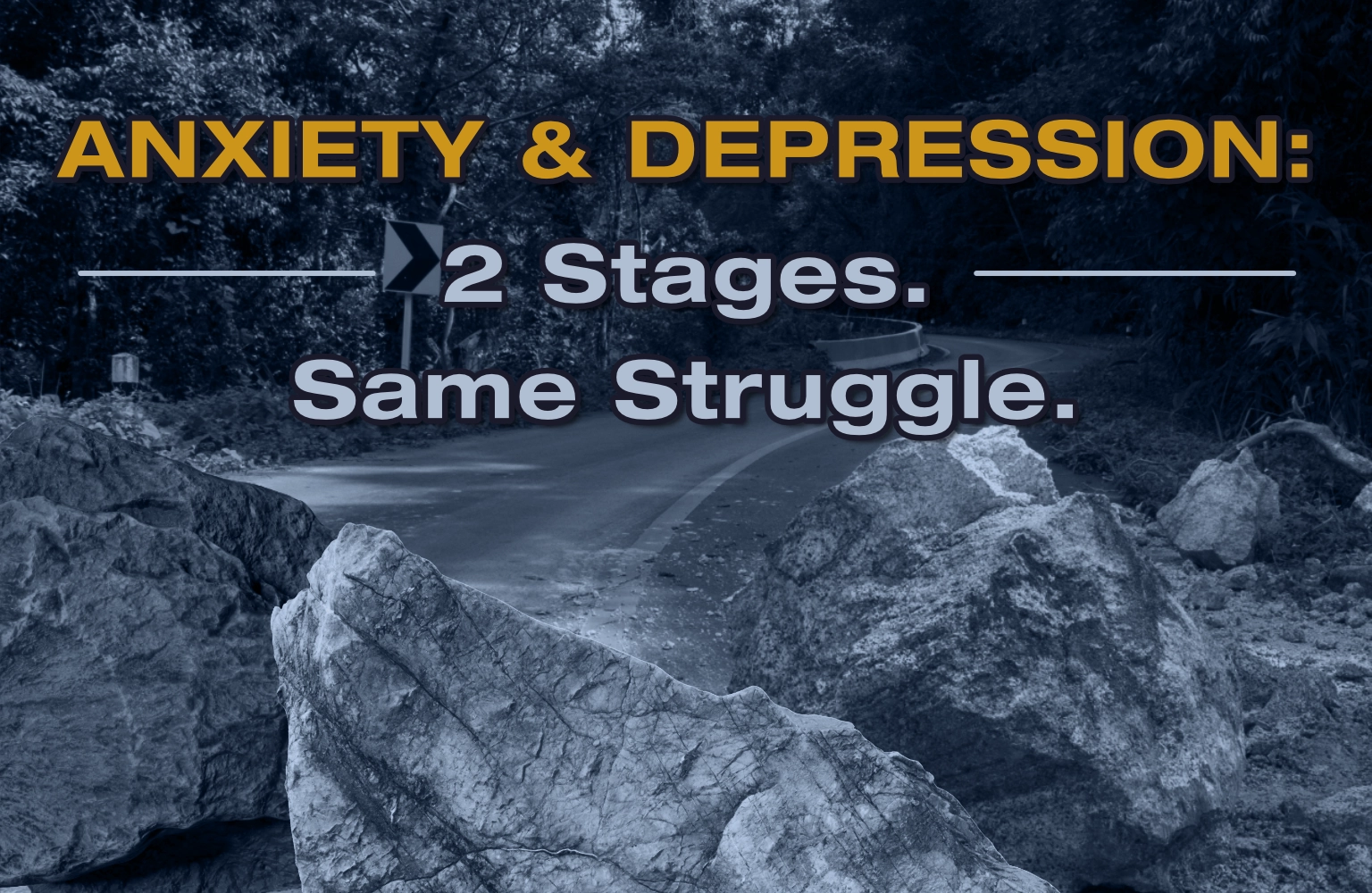
How did he know that? He explained it’s because that’s how the mind works. Most superhero movies show us exactly how anxiety and depression work, even though we don’t think of those movies in that way.
FIGHT or FLIGHT
Think about your favorite superhero movie. During a long battle between the superhero and the villain, the superhero is committed to saving the entire city at all cost, even risking his own life. He uses his super powers, like spiderwebs, flying, or hammers, and other makeshift weapons. Those weapons can be subway cars or entire buildings lifted off the ground. As you watch, your adrenaline rushes over near-death falls or almost being crushed to death under a crumbling building.
I care about everything. That’s what anxiety feels like. It’s stage 1.
FREEZE
Near the end of all superhero movies, the superhero finds himself cornered. He’s lost his superpowers for some reason, and no weapons are in reach. He is hanging on to life by a thread. There is no more fight in him, and he can’t run.
I care about nothing. If you’re going to kill me, just get it over with. That’s what depression feels like. It’s stage 2.
What Your Body is Trying to Tell You
Some health conditions can be life-threatening.
Some symptoms may not be dangerous at all, but have a major, negative impact on your quality of life.
I’ve learned from having multiple health issues that conditions and symptoms are very different from each other. A person can have high cholesterol and high blood pressure—conditions—but have no symptoms that seem to affect their quality of life. That’s why some people die unexpectedly—they don’t feel sick.
On the flip side, a person may have debilitating dizziness and fatigue—symptoms—but their actual medical condition isn’t life-threatening. I’ve learned that good doctors treat both medical conditions and symptoms.
Symptoms Drive Us
If your quality of life has ever been impacted by symptoms, you can appreciate that it sometimes feels more urgent to get your symptoms treated than to spend time treating conditions that have no symptoms. I need to do both because of the obvious. I had a heart attack that led to cardiac arrest. That means I have a higher risk of another cardiac arrest.
If it weren’t for terrible physical symptoms, I may not have realized I needed to get help. Since I did, that resulted in a diagnosis of POTS. Once I understood it, I was able to manage my symptoms, like dizziness, shortness of breath, and racing heart. When I feel those physical symptoms, I remind myself, “It’s just a feeling.” Other times, it’s actual anxiety. I have learned to work through that as well.
For many, the pain of symptoms is what drives us to get help.
Sometimes, treating a condition resolves the symptoms. Other times, which are much more frustrating, treating the condition doesn’t eliminate nagging symptoms. Treating one condition can reduce your symptoms but cause unrelated symptoms. For example, I have movement disorders from Lance Adams Syndrome. One medication reduces unwanted movements, which is great. It also causes drowsiness, which is not great. I already deal with extreme fatigue, but I tried the medication anyway. I was disappointed that it made me so sleepy. I napped all the time, and when I was awake, I felt like I was in a fog and wanted to sleep. After a couple of months, I had to stop taking it. What’s the point of reducing unwanted movements if I’m sleeping my life away?
Confronting Our Conditions is the First Step
Most people understand this principle when it comes to physical health. It’s less understood, and even less acted upon when it comes to mental health. There is much less stigma today surrounding mental health than 20 years ago. However, much less doesn’t mean it’s eliminated. People still hesitate to get help for mental health more than they do physical health.
Quietly suffering alone isn't noble.
It's unhealthy.
Conditions and symptoms happen in all parts of our lives.
If you seem to always have conflict with coworkers, it can be a symptom. The deeper condition is that you have trouble with relationships. There is help for figuring that out.
If you have constant fear of bad things happening, that can be a symptom. You may have a mental health issue like anxiety, which is a condition. You can get help for that.
I understand wanting to treat symptoms, especially when those symptoms affect your quality of life. Like medical conditions, symptoms often do not go away until the condition is effectively treated. Real growth happens in our lives when we can be honest with ourselves and acknowledge unhealthy conditions that need to be addressed.
Symptoms are Messages from Your Body
I can’t recall having any significant issues with anxiety or depression until after cardiac arrest. My anxiety wasn’t over the fear of dying or having another heart attack. No, it’s because my nervous system has been fried.
A few years ago I had a particular cardiac test that had good results. I said to one of my cardiologists, “So then my heart is great, right?”
No.
He said it’s like in the old days, during an electrical storm when your TV would be fried. It may still turn on. Some channels have picture but no sound. Others have sound but no picture. Some channels are just a green screen. A few channels work fine. You can’t say that’s great because one aspect is good.
Closed Roads
Imagine going to the grocery store to pick up coffee and bread. Your usual way home takes you 10 minutes. This time, a bridge is out and you are sent on a detour. It’s no ordinary detour. It takes you seven hours to get home.
A friend asks why it took so long. You explain the bridge being destroyed and the unwanted detour. Your friend insists there had to be a faster route. It shouldn’t have taken you that long, but it did.
That’s how a brain injury affects your ability to take normal routes. Those routes can be for decision making, remembering simple instructions, communicating clearly or managing your emotions. Some of those roads and pathways that heathy people take to overcome anxiety, for me, have been destroyed.
Thankfully, the brain can be rewired. I’ve worked hard to follow the plans I’ve been given in therapy. Therapy is many things: It’s empowering, tiring, helpful, frustrating, and—somehow—amazing. That work helps rewire the brain. I still need extra help, and I’m not ashamed to admit that.
When I experience certain symptoms like dizziness or extreme fatigue, I used to think, “Why is this happening?” Thanks to therapy, I’ve learned to see those symptoms as messages from my body. I might need more electrolytes, more water or I might need to let myself rest. I can’t stop symptoms, but I can learn to align myself with what my body is telling me. That can reduce my symptoms… many times, not always.
I’m rewiring my brain, and you can rewire yours. It takes a long time to build new roads and pathways.
If you thought the road construction in your town takes forever, imagine how long it takes to build new pathways in our complex brains.




0 Comments